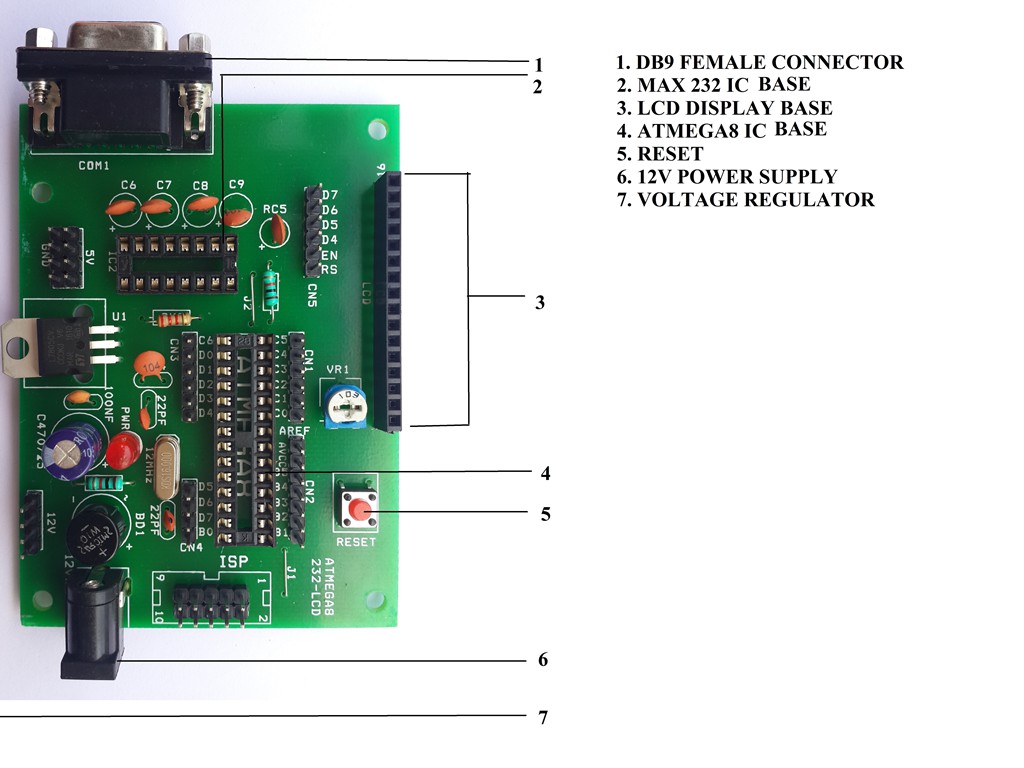
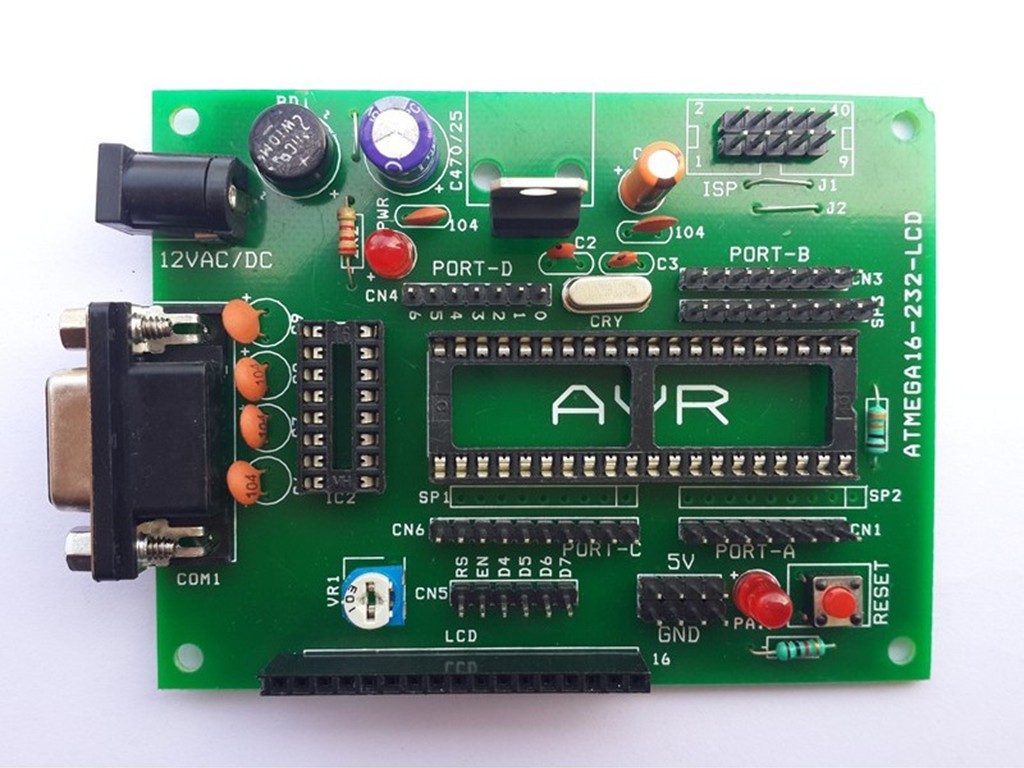
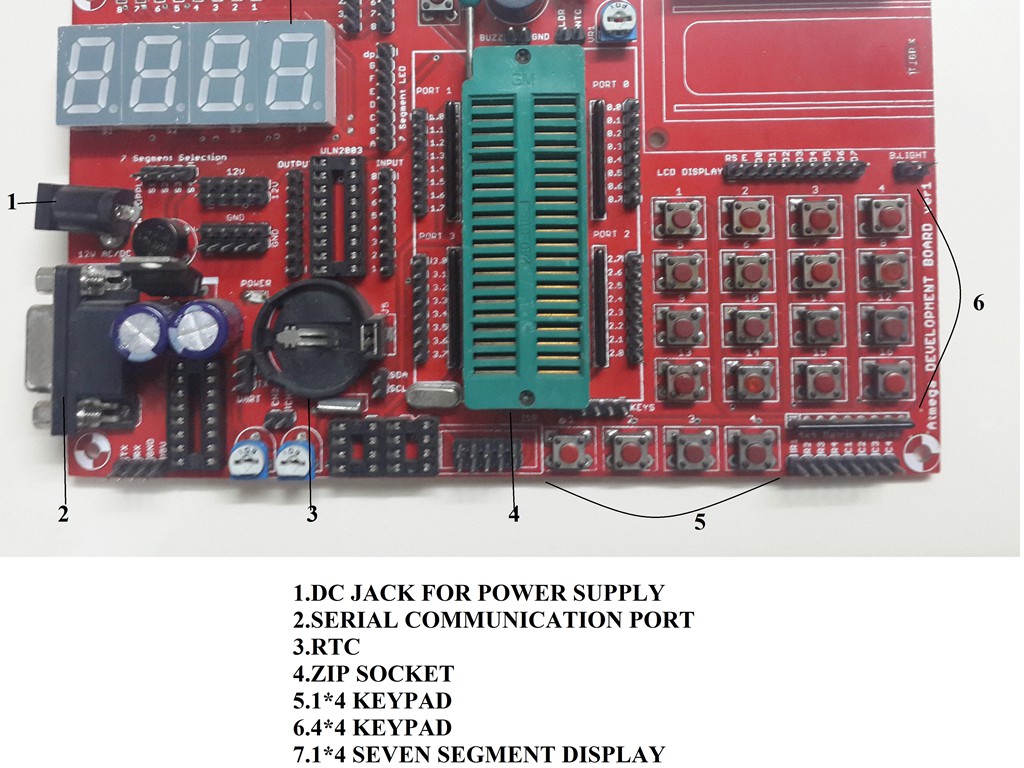
ATMEGA8 Development Board The ATmega8 Development board, also known as the AVR microcontroller, is a popular choice for electronic projects. The 28 PIN ATmega8 development board offered at a reasonable price is perfect for those looking to begin working with AVR microcontrollers without breaking the bank. Additionally, it can serve as a tidy and dependable foundation for various compact projects, as traditional breadboards and proto PCBs often become cluttered and unreliable over time. Some characteristics of ATmega8 Development board: The output is regulated at -5v. Suitable for use with 28 pin chips such as ATmega8, ATmega48, ATmega168, and ATmega328. A 16 MHz crystal is ideal for achieving the highest speed. Implementing an LC Filter on AVcc can greatly improve the overall performance of the ADC. All power pins must have decoupling capacitors. The Standard ISP Header can be reprogrammed using our USB AVR Programmer v2.0. Input voltage: 9-18V DC. Press the reset button. LED indicating power status. This FR4 PCB contains both a solder mask and silk screen components. The tinning process has been completed on all PCB pads. 8 kilobytes of flash memory that can be programmed in-system The EEPROM has a capacity of 512 Bytes and an endurance of 100,000 write/erase cycles. The In-System Programming feature allows for programming through the on-chip boot program, while the Optional Boot Code Section includes independent lock bits. 1 kilobyte of SRAM The analog comparator is a type of circuit that compares two voltages and outputs a logical signal indicating which one is larger. The watchdog is responsible for keeping an eye on things. The substance of interest is being monitored, as per the regulations of SPI. There are a couple of 8-bit Timer/Counters in this device that have their own Prescaler. Additionally, one of them has a Compare Mode. The device includes a 16-bit Timer/Counter that features its own Prescaler, Compare Mode, and Capture Mode. A real-time counter equipped with an independent oscillator. There are a total of three PWM channels available. The 6-channel ADC consists of four channels with 10-bit accuracy and two channels with 8-bit accuracy. The Two-wire Serial Interface is byte-oriented. Introducing our versatile Programmable Serial USART, designed to enhance your programming experience. The SPI Serial Interface, also known as the Master/Slave interface, is used for communication between two devices. RC Oscillator with Internal Calibration Sources of interruption both external and internal The five available sleep modes are: Idle, ADC Noise Reduction, Power-save, Power-down, and Standby. Configurable Input/Output Channels Operating within the voltage range of 4.5 to 5.5 volts.